Ancestors Are Aesthetic Now: How Gen Z Turned Genealogy Into a Whole Vibe
Somewhere between a cottagecore Pinterest board and a 60-second TikTok set to a haunting Mitski track, genealogy got a makeover. And honestly? It kind of slaps.
If you've spent any time on the genealogy corners of social media lately, you've probably noticed something different happening. The hobby that used to mean squinting at microfilm in a fluorescent-lit library has found a new home — and a new look. Gen Z researchers aren't just digging up ancestors. They're styling them.
From Dusty Hobby to Digital Mood Board
Talk to any young genealogy creator online and they'll tell you the same thing: it started with a feeling. Maybe it was a faded photograph of a great-grandmother they never met, or a surname that didn't quite fit the family story they'd been told. That feeling — mysterious, a little melancholy, deeply personal — turns out to be extremely photogenic.
Creators like 22-year-old Dani from Columbus, Ohio, who runs a genealogy account with over 40,000 followers, describe their content as less about research methodology and more about atmosphere. "I want people to feel the weight of it," she says. "Like, this wasn't just a name in a census. This was a whole person who lived and struggled and loved people."
Her videos feature slow pans across old documents, ambient music, and text overlays that read more like poetry than research notes. The comments are full of people saying things like "this made me want to call my grandma" and "I'm crying in the genealogy."
That emotional resonance is exactly what's driving genealogy's aesthetic revolution. For a generation raised on visual storytelling, the past is just another narrative — and narratives need a look.
The Pinterest-ification of Family History
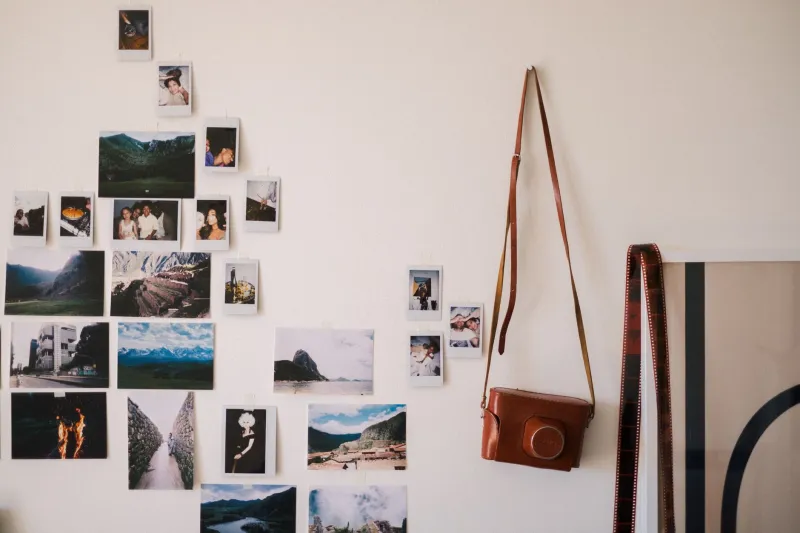
Over on Pinterest, "family history aesthetic" boards are multiplying fast. Think: antique maps layered over sepia portraits, carefully arranged letters tied with twine, handwritten family trees in calligraphy fonts. It's part scrapbooking, part art project, part actual historical research — and the lines between those things are getting blurry in interesting ways.
The visual language borrows heavily from other Gen Z aesthetics — dark academia, cottagecore, goblincore — but it has its own emotional texture. Heritage aesthetic tends to skew toward the bittersweet. There's a specific kind of longing in it, a reaching backward that feels very much of this cultural moment.
RootsGather community members have noticed the trend spilling into their own circles. Forum threads that used to be purely research-focused now include posts asking things like "how do I display old photos without damaging them?" and "what's a good font for a printed family tree that doesn't look boring?" The research and the presentation are becoming inseparable.
When Aesthetics and Accuracy Collide
Here's where it gets complicated, though. Because looking good and being accurate don't always want the same thing.
Some veteran genealogists have raised eyebrows at content that prioritizes the vibe over the verification. A beautifully edited video about a supposed ancestor who "survived a war and crossed an ocean" might get a million views — but if the research behind it is shaky, what exactly is being celebrated?
"I love that young people are interested," says one long-time RootsGather community member who's been tracing her Appalachian family lines for over two decades. "But sometimes I watch these videos and I think — did you actually source that? Or did it just feel true?"
It's a fair tension. Genealogy has always had a complicated relationship with family mythology — the stories we want to be true versus the records that tell a different story. Gen Z didn't invent that tension. But they have amplified it in new ways.
To be fair, many young creators are extremely rigorous. The genealogy TikTok community in particular has developed a culture of source-checking and calling out misinformation that would make a professional archivist proud. Duet videos where researchers gently correct viral claims have become a whole sub-genre. The community polices itself, sometimes harshly.
Heritage as Identity, Not Just Hobby
What's really going on here, underneath the aesthetics and the algorithms, is something more profound. For a lot of Gen Z researchers, genealogy isn't a weekend hobby. It's an identity project.
In a cultural moment defined by questions about belonging, authenticity, and roots — literal and figurative — tracing your family history offers something rare: a story that's specifically yours. Not a trend you bought into. Not a personality you downloaded from the internet. Something inherited, earned, and irreplaceable.
"My family's history is the one thing nobody can take from me or tell me I'm doing wrong," says Marcus, a 24-year-old from Atlanta who documents his research into his family's Georgia roots. "It's mine. All of it — the hard parts, the proud parts, the parts that don't make sense yet."
That kind of ownership is powerful. And when you combine it with the visual fluency Gen Z brings to everything they touch, you get something genuinely new: genealogy that doesn't just preserve the past but performs it, shares it, invites other people into it.
The Glow-Up Is Actually Kind of Great
Here's the thing: even the skeptics tend to admit that the aesthetic turn has been good for the community overall. More people are interested in genealogy than ever before. Archives are seeing younger visitors. DNA testing kits are flying off shelves. And platforms like RootsGather are welcoming members who might never have found their way here through a library catalog.
If a perfectly lit flat lay of old census records is what gets someone to start asking questions about where they came from, that seems like a pretty decent trade-off.
The research will deepen. The sources will get cited. The vibes will evolve. But the impulse underneath it all — to know who you are, to see your face in someone else's photograph, to feel connected to something larger than yourself — that's as old as human beings have been telling stories.
Gen Z just figured out how to make it look incredible while they do it.