The Town Knows Best: Inside the World of Local Genealogy Gatekeepers
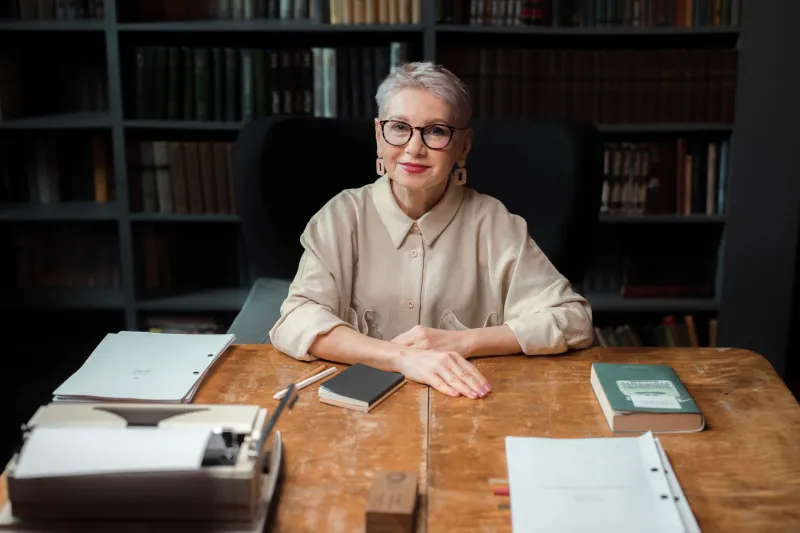
Every small town seems to have one. Maybe she's in her seventies, lives in a house overflowing with manila folders and laminated newspaper clippings. Maybe he volunteers at the county historical society every Tuesday and knows the maiden names of women who died before the Civil War. They are the self-appointed — or community-anointed — keepers of local family history. And their influence runs deeper than most outsiders would ever guess.
On genealogy forums and in RootsGather community threads, these figures come up constantly. Sometimes with admiration. Sometimes with frustration. Often with both at the same time.
How the Legend Gets Made
It rarely starts with a power grab. Most local genealogy gatekeepers stumble into their roles organically. They spend decades collecting — cemetery transcriptions, church records, old photographs donated by families who didn't know what else to do with them. They answer letters (actual paper letters) from researchers across the country. They show up.
Over time, that showing up becomes something else. They become the person. The one whose name gets passed around in hushed tones at family reunions. "You need to talk to Marvella over in Harlan County — she knows everything." And Marvella probably does. That's the thing. These people have often done extraordinary, unglamorous work that nobody else wanted to do.
But knowledge is leverage, even when nobody intends it to be.
When Helping Becomes Holding
Here's where it gets complicated. A recurring theme in genealogy communities — and one that surfaces regularly in RootsGather discussions — is the experience of reaching out to a local expert and hitting an unexpected wall.
Sometimes it's subtle. Emails that go unanswered for months. Requests for records that are met with vague promises and slow follow-through. Other times it's more explicit: researchers who discover that a local historian has digitized decades of county records but refuses to share them publicly, insisting that anyone who wants access must go through them personally.
Is this hoarding? Or is it stewardship? The line is blurrier than you might think.
Some gatekeepers operate this way out of genuine concern — they've watched digitized records get misattributed, family stories get mangled, and sensitive information about living relatives get splashed across public trees without consent. Their caution comes from experience.
Others, if we're being honest, have developed a relationship with their own indispensability. The records give them status. Being the person who knows things is its own reward, and sharing freely would dilute that.
The Generational Fault Line
Add in the internet, and the tension sharpens considerably. Younger researchers — many of whom discovered genealogy through DNA testing and online platforms — often approach local history with an open-source mindset. Information wants to be free. Digitize it, upload it, let everyone access it.
Older gatekeepers frequently push back, and not always without reason. They point out that a census record stripped of context is just a name and a date. The stories behind those names — who was estranged from whom, which family crossed which county line to escape what — live in the heads of people who've spent lifetimes collecting them. You can't just scrape that into a database.
But that argument can also become a convenient shield. "You need context" sometimes translates to "you need to come through me."
In RootsGather community spaces, this fault line plays out in real time. Threads about specific counties or ethnic communities will often feature younger researchers expressing exasperation that crucial records are locked up in someone's personal collection, while older members defend the gatekeepers as people who "actually put in the work."
Both sides have a point. That's what makes it so thorny.
The Ethics Nobody Wants to Talk About
Here's the uncomfortable question lurking underneath all of this: who actually owns collective family history?
If a local historian spent thirty years transcribing gravestones in a rural Tennessee cemetery, do they have a proprietary claim on that information? Legally, probably not — facts can't be copyrighted. Morally? It's murkier. There's a reasonable argument that the labor of documentation creates some kind of ethical claim, even if not a legal one.
But there's an equally reasonable counter-argument: the people buried in those graves, and their living descendants, have a stake in that information that supersedes any individual researcher's effort. Family history belongs to families. The archivist is a custodian, not an owner.
This tension isn't unique to genealogy — it shows up in museum ethics debates, in indigenous communities fighting to reclaim cultural records, in academic arguments about who gets to tell whose story. But it hits differently when it's personal. When the records locked in someone's spare bedroom include your great-grandmother's immigration papers.
What Communities Are Doing About It
Some local historical societies have started formalizing what was once informal. They're creating policies around donated materials, requiring that collections be made accessible within a certain timeframe. Some county libraries have begun actively digitizing and hosting local genealogical records as a public service, deliberately removing the single-point-of-failure problem that individual gatekeepers create.
In other places, community members have found gentler solutions. Younger researchers have built relationships with longtime local historians — treating them as collaborators rather than obstacles, acknowledging their expertise publicly, and in return gaining access to materials that might otherwise stay locked away.
It's not a perfect system. But it's a human one.
The Legacy Question
Maybe the most pressing issue isn't about access at all. It's about what happens when the gatekeeper is gone.
Local genealogy legends aren't getting younger. And when they pass — as several well-known regional historians have in recent years — the fate of their collections becomes urgent. Families scramble. Historical societies make emergency appeals. Sometimes materials are donated intact. Sometimes they're dispersed at estate sales, or worse, thrown away by heirs who don't understand what they're looking at.
The knowledge that lived in someone's head? That's gone entirely.
This is the argument that tends to soften even the most frustrated researchers. Whatever their flaws, the gatekeepers preserved things that would otherwise have been lost. The goal now is to figure out how to honor that work while making sure the next generation doesn't have to start from zero — or beg for access to their own history.
On RootsGather, that conversation is already happening. Researchers are pooling resources, building county-level wikis, and reaching out to local historians with genuine partnership proposals rather than simple data requests. It's slow work. But then, so is genealogy.