Cobblestones and Census Records: 7 American Cities Where Immigrant History Still Breathes
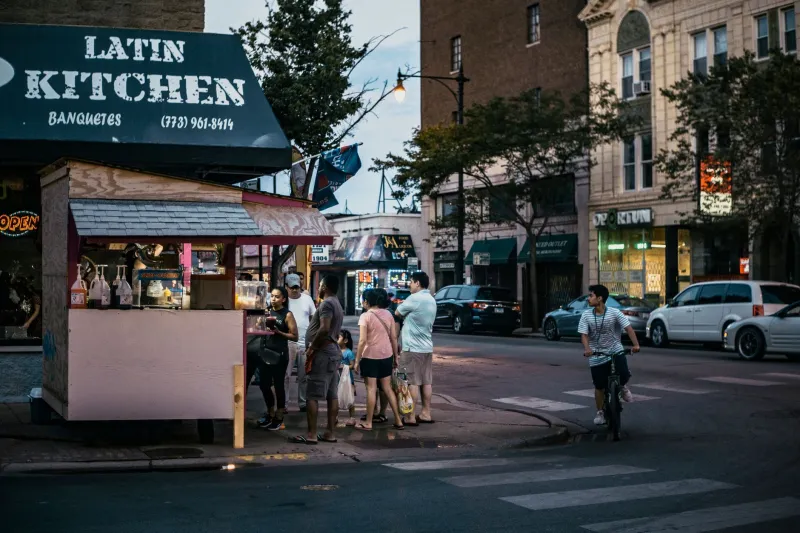
There's a particular feeling that hits you when you're standing in a neighborhood your ancestor once called home. The buildings may have changed. The language on the storefronts has probably shifted. But something in the air — the layout of the streets, the way the light falls on an old church facade — connects you to a story that's also yours.
For millions of Americans, that feeling is findable. You just have to know where to look. Here at RootsGather, we've pulled together seven US cities where immigrant heritage isn't just historical footnote — it's woven into the city's actual DNA. Each one offers real genealogical resources, tangible landmarks, and community connections that can bring your family's journey into sharper focus.
1. New York City, New York — The Gateway That Never Closed
No list like this starts anywhere else. Between 1892 and 1954, more than 12 million immigrants passed through Ellis Island, and the vast majority arrived in New York Harbor with little more than a name tag and a suitcase. The Ellis Island Immigration Museum (accessible by ferry from Battery Park) houses an extraordinary searchable database of arrival records — passenger manifests that include names, ages, last place of residence, and the name of the person immigrants were traveling to meet.
But New York's immigrant story didn't start or stop at Ellis Island. The Lower East Side Tenement Museum on Orchard Street offers some of the most visceral genealogical experiences available anywhere in the country — actual restored apartments where real immigrant families once lived, with programming that traces the specific histories of Irish, German, Jewish, Italian, and Chinese residents.
For Eastern European Jewish families, the Center for Jewish History on 16th Street in Manhattan holds records spanning multiple continents. Italian-American researchers should explore the American Italian Heritage Museum in Albany (a day trip from the city) and the records held by the Archdiocese of New York.
RootsGather tip: The New York City Municipal Archives has digitized millions of vital records. Search them alongside Ellis Island passenger lists for a powerful one-two genealogical punch.
2. Chicago, Illinois — Where the Midwest Was Built by Many Hands
Chicago's immigrant story is one of the most layered in the country. Polish, Czech, Slovak, Lithuanian, Greek, Italian, Mexican, and Chinese communities all planted deep roots here, many of them drawn by the meatpacking industry, the steel mills, and the railroad yards that made Chicago the industrial heart of America.
Pilsen, on the city's Lower West Side, remains one of the most vibrant Mexican-American cultural neighborhoods in the Midwest — a living archive of migration patterns that intensified through the 20th century. Meanwhile, the Polish Museum of America in the Wicker Park neighborhood holds one of the largest collections of Polish-American historical materials in the world, including church records, photographs, and personal documents.
The Newberry Library is Chicago's genealogical crown jewel. Its collection includes Native American records, immigration documents, local histories, and an extraordinary map collection that can help you pinpoint exactly where your ancestor's neighborhood once stood.
3. San Francisco, California — The Pacific Rim Meets the Gold Rush
San Francisco's Chinatown is the oldest in North America, established in the 1840s, and it remains a living community rather than a museum piece. Chinese immigrants came first for the Gold Rush and then built the Transcontinental Railroad — a contribution that's finally receiving the historical recognition it deserves.
The Chinese Historical Society of America on Clay Street holds archives, photographs, and oral histories that are invaluable for families tracing roots to Guangdong Province. Be aware that the 1906 earthquake and fire destroyed many city records, but researchers have developed creative workarounds, including "paper son" documentation and immigration interview transcripts held by the National Archives in San Bruno.
San Francisco is also the entry point for Japanese, Filipino, and Korean family histories. The Japanese American National Library and the Filipino American National Historical Society both maintain significant Bay Area collections.
4. New Orleans, Louisiana — Where Africa, France, and the Caribbean Converged
New Orleans defies easy categorization, which is exactly what makes it so fascinating for genealogical research. The city's Creole heritage represents one of the most complex cultural fusions in American history — a mixture of French, Spanish, African, Native American, and Caribbean influences that produced a community unlike anywhere else in the country.
The New Orleans Notarial Archives hold records stretching back to the French colonial period, including property records, wills, and — critically for researchers tracing enslaved ancestors — manumission documents and slave sale records. The Historic New Orleans Collection on Royal Street is another essential stop.
For Vietnamese-American families, New Orleans East is home to one of the largest Vietnamese communities in the South, with community organizations that maintain oral histories and cultural records from the post-1975 refugee resettlement period.
5. Boston, Massachusetts — Irish America's Spiritual Home
Boston received wave after wave of Irish immigrants fleeing famine in the 1840s, and the city's political, cultural, and religious life was permanently shaped by their arrival. The Archdiocese of Boston holds some of the most comprehensive Catholic parish records in the country — baptisms, marriages, and burials that can trace Irish-American families back to specific townlands in Ireland.
The New England Historic Genealogical Society (NEHGS), headquartered in Boston, is one of the oldest and most respected genealogical organizations in America. Their library and database holdings are extraordinary, and their research staff can assist with complex cases. Italian and Portuguese immigrant communities also left significant records in the greater Boston area, particularly in East Boston and the North End.
6. Detroit, Michigan — The City That Cars and Communities Built
Detroit's 20th-century industrial boom created one of the most remarkable demographic transformations in American history. The auto industry drew Polish, Hungarian, and Ukrainian immigrants from Eastern Europe, Arab immigrants from Lebanon and Yemen (Dearborn remains home to one of the largest Arab-American communities in the country), and — critically — hundreds of thousands of Black Southerners during the Great Migration.
The Walter P. Reuther Library at Wayne State University holds labor movement records that often contain rich personal information about immigrant workers. The Arab American National Museum in Dearborn is the only museum of its kind in the US and holds archival materials alongside its cultural exhibits.
7. San Antonio, Texas — Where Spanish Colonial History Meets Living Culture
For families with Mexican or Spanish colonial ancestry, San Antonio is an essential destination. The city's records predate American statehood by more than a century, and the Bexar County Archives hold Spanish colonial documents, land grants, and church records that can push family trees back to the 1700s.
The Institute of Texan Cultures maintains one of the most comprehensive collections of Texas ethnic heritage materials in the state, covering 26 different cultural groups who shaped the region. The San Fernando Cathedral, still active today, has baptismal records going back to 1731.
RootsGather tip: If you're researching tejano or Mexican-American ancestry, the Texas State Library and Archives Commission has digitized many colonial-era records that are searchable online before you even book your trip.
Every one of these cities has a RootsGather community thread where members share local research tips, archive hours, and sometimes even offer to look something up if you can't make the trip yourself. Your ancestors made the journey once. Sometimes, all it takes is following the path they left behind.