Who Owns the Past? Inside the Battle Over Private Family Archives
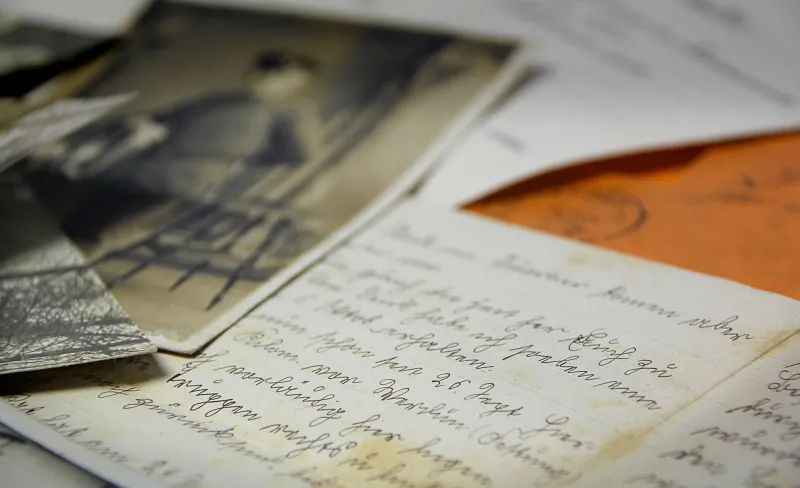
Somewhere in a farmhouse in rural Ohio, a retired schoolteacher has boxes of handwritten letters, church ledgers, and land deeds stretching back to the 1700s. She's spent decades organizing them, cross-referencing names, and building a meticulous family tree that branches out across six generations. She's also not entirely sure she wants to share any of it.
This is not an unusual story. Across the United States, private family historians — some hobbyists, some near-professional researchers — have quietly accumulated genealogical archives that would make county historical societies envious. And increasingly, the broader research community is bumping up against a frustrating reality: some of the most valuable records in American family history are sitting in someone's spare bedroom, accessible only by invitation.
The Keeper and the Key
For people who've spent years — sometimes decades — building out a family archive, the idea of simply handing over access isn't as straightforward as outsiders might assume.
"I've had strangers email me demanding documents like I work for the National Archives," says one genealogist from western Pennsylvania who asked to remain anonymous. She manages an archive covering a large extended German-immigrant family with roots in Allegheny County going back to the mid-1800s. "Some of these records involve living people. Some involve things families haven't told their own children. I'm not a public library."
That tension — between historical value and personal privacy — is at the heart of the debate. Private archivists often argue that they're the reason these records exist at all. Without their personal investment of time, money, and obsessive organizational energy, those letters would have yellowed into dust at an estate sale. They feel a genuine sense of stewardship, not just ownership.
But researchers on the other side of the locked door have their own legitimate frustrations.
Dead Ends That Don't Have to Be
Ask anyone deep in a genealogy research project and they'll tell you: the dead end is the defining emotional experience of the hobby. You trace a line back confidently through census records and marriage certificates, and then — nothing. The trail goes cold around the Civil War era, or earlier, and you're left staring at a blank space where a great-great-grandmother should be.
Now imagine knowing that someone, somewhere, has already solved that puzzle — and won't return your messages.
"I found a researcher through an old forum post who clearly had records connecting my Appalachian line to families in Virginia," says Marcus T., a community member on RootsGather from Nashville. "He had posted about it publicly. But when I reached out, he said the information was 'part of a private project' and he wasn't sharing until it was 'complete.' That was four years ago."
This kind of information silo doesn't just frustrate individual researchers. It can distort the broader historical record. When knowledge concentrates in private hands, errors go uncorrected, connections go unverified, and entire branches of American family history remain invisible to the people they belong to.
For communities already working against fragmented records — Black families tracing lines through slavery, Indigenous families navigating federal records that were often inaccurate or deliberately falsified, immigrant families whose paper trails cross multiple countries — private archives that stay locked can feel like yet another obstacle in a long line of them.
The Middle Ground Some Communities Are Finding
Not everyone is drawing hard lines. A growing number of genealogical societies and online communities are experimenting with what some are calling "conditional sharing agreements" — informal or semi-formal arrangements that give private archivists control over how their materials are used while still allowing access to vetted researchers.
The idea borrows loosely from academic research ethics. A private archivist might agree to share documents with a researcher who signs a simple agreement: no publishing names of living individuals without consent, no commercial use of the materials, credit given to the original compiler. It's not legally binding in most cases, but it creates a framework of mutual respect that seems to lower the temperature on both sides.
Some regional genealogical societies in the South — where extended family networks and old-money lineage consciousness run particularly deep — have started hosting what they call "archive days," where private collectors bring materials for supervised review by other researchers. Nothing leaves the room, photographs are sometimes restricted, but the knowledge gets shared.
"It's not perfect," admits one coordinator of such an event in Charleston, South Carolina. "But it's better than everyone hoarding everything and nothing ever getting verified."
Online platforms have also stepped into the gap. Some RootsGather community members have started using the forum's private messaging and group features to build trust networks — essentially vouching for researchers before introducing them to private archivists. It's a slow process, but several members report it's led to breakthroughs they couldn't have achieved through official channels.
When Preservation Becomes Possession
There's a harder question lurking underneath all of this, and it's worth sitting with for a moment: at what point does stewardship tip into something more like control?
Genealogical records are unusual objects. Unlike a painting or a piece of jewelry, they carry information that belongs, in some meaningful sense, to everyone they describe. A letter written by your ancestor is your artifact. But the names, dates, and relationships it contains? Those touch dozens of living families who may have no idea the document exists.
Legal frameworks haven't caught up with this complexity. There's no law requiring private individuals to share genealogical materials, and copyright on historical documents is murky at best. What exists instead is a community norm — and right now, that norm is contested.
Some archivists argue they have an obligation to eventually donate or digitize their collections, at least the historical portions. Others push back hard on the idea that any obligation exists at all.
"My grandmother saved these things," one archivist told us. "My mother organized them. I've spent thirty years adding to them. At some point, the labor has to count for something."
It does. And so does the history those documents hold.
Finding Your Way Through
If you're a researcher hitting walls with private archives, the community here at RootsGather has a few practical suggestions worth trying before giving up:
- Lead with relationship, not request. Private archivists are more likely to open up to someone who engages with their work genuinely before asking for something.
- Offer something in return. Do you have records that might fill gaps in their tree? Reciprocity changes the dynamic.
- Go through organizations. Regional genealogical societies sometimes have relationships with private collectors that you don't.
- Be patient. Some of the best breakthroughs in this community have come from years-long correspondence, not cold emails.
The tension between private ownership and shared history isn't going away. But the genealogy community has always been at its best when it treats the past as something that belongs to all of us — even when the documents are stored in someone else's spare bedroom.