Deep Roots, Home Turf: Why Living in a Small Town Is a Genealogy Superpower
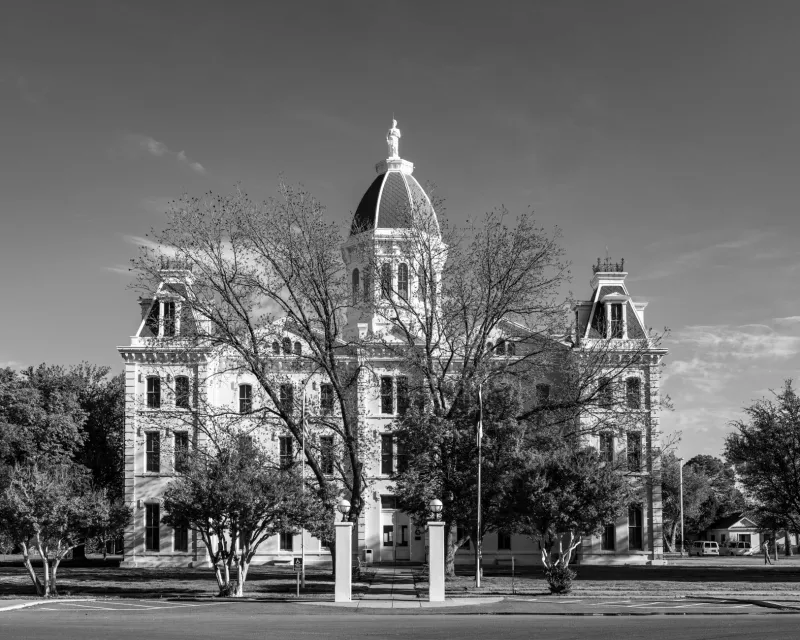
Drive about forty minutes outside of any major American city and you'll start to notice something. The cemeteries get older. The courthouses get smaller. The librarians know your last name — and your grandmother's last name, and probably the county your great-great-grandmother came from before she married into the local family.
Out here, genealogy isn't a hobby you have to go looking for. It's just the texture of daily life.
The Geography of Memory
There's a quiet revolution happening in American genealogy, and it's not being driven by technology. It's being driven by proximity.
While urban and suburban genealogists are navigating digital archives, subscription databases, and the complicated logistics of researching places they've never lived, rural researchers are sitting on top of their own history. Literally, in some cases — there are families in Appalachia, the Deep South, the rural Midwest, and the mountain West who have been living within a few miles of their ancestral land for five, six, seven generations.
That kind of geographic continuity creates genealogical advantages that are genuinely hard to overstate.
"I can drive to the church where my family has worshipped since 1887," says Patsy, a retired nurse from a small community in eastern Kentucky. "The current pastor knows which families have plots in the cemetery. The church secretary has the old baptism records in a filing cabinet in the back room. I didn't find any of that on Ancestry. I found it because I live here."
For urban researchers trying to trace rural roots — which describes a significant chunk of the American genealogy community, given the mass migrations of the 20th century — that kind of access is exactly what they're missing.
What Small Towns Actually Have That Cities Don't
Let's be specific, because the advantages are real and they're varied.
Community record-keeping. Rural counties, particularly in the South and Midwest, often have remarkable local archives maintained by historical societies, churches, and county governments. These records — land deeds, probate files, church registers, local newspaper archives — are frequently not digitized. They exist in physical form, accessible primarily to people who can walk through the door and ask.
Living memory networks. In small towns, the oral history tradition is still alive in ways it simply isn't in cities where families scatter across neighborhoods and generations lose touch. The 85-year-old who remembers your grandmother's farm isn't just a lucky find — she's your neighbor. She's been your neighbor your whole life.
Embedded family networks. When your third cousin is also your kid's soccer coach and your next-door neighbor's daughter married into your family fifteen years ago, the web of family connections stays visible and maintained in a way that urban dispersal makes nearly impossible.
Physical landmarks. The old house is still there. The family farm might still be in the family. The general store where your great-grandfather had an account might be a hardware store now, but the building is the same, and the current owner found the old ledgers in the basement and donated them to the county historical society.
The Digital Divide Cuts Both Ways
Here's the counterintuitive part of this story: the same rural communities that have these deep, embedded genealogical resources are often the ones with the most undigitized records. Which means the advantages are invisible to anyone who isn't physically present.
Type a small rural county into an online genealogy database and you might get a handful of census records and a few vital records from the state archive. What you won't get is the box of church bulletins from 1952 to 1978 that a local historian has been cataloging in her spare time, or the funeral home records that the current owner is happy to share if you call ahead.
The genealogy subscription services that have democratized so much of the hobby — and genuinely transformed access for millions of researchers — have a systematic blind spot for the hyperlocal, the undigitized, and the informally preserved.
"People think if it's not online, it doesn't exist," says Harold, a county historian in rural Georgia who has spent thirty years building a local archive that's consulted by researchers from across the country. "But some of the best stuff I have will never be online. It's too fragile, too local, too specific. You have to come here."
For RootsGather members trying to trace rural Southern, Appalachian, or Great Plains roots, that reality is both frustrating and clarifying. The research trip isn't optional. It's the research.
What Urban Researchers Can Learn From the Home-Field Advantage
None of this means that city-based genealogists are out of luck — far from it. But it does suggest a few strategic shifts worth considering.
First, find your proxy. If you can't travel to the county your family came from, find someone who lives there. Local genealogy societies, county historical societies, and online communities like RootsGather are full of people who are embedded in exactly the places you're trying to research. A local contact is worth a hundred database searches.
Second, plan the trip. Seriously — if you have rural ancestral roots, there is no substitute for a research visit to the county courthouse, the local library, the historical society, and yes, the cemetery. Plan it like a trip, not an afterthought.
Third, think about what your family carried with them when they left. Migration stories are genealogical gold. The letter a great-grandmother wrote back to the home county, the photograph labeled with a town name, the recipe card written in a language nobody in the family speaks anymore — these fragments are the bridge between your urban present and your rural past.
The Advantage Nobody Talks About
There's one more rural genealogy advantage that doesn't get discussed enough: the sense of place that shapes the research.
When you're researching ancestors who lived in a place you can still visit — where the land looks roughly the same, where the seasons they experienced are the seasons you experience, where the courthouse they filed papers in is the courthouse you drive past on the way to the grocery store — the history becomes dimensional in a way that no database can replicate.
It stops being a research project and starts being a conversation with the landscape itself.
"I walk the same ridgeline my great-grandfather walked," says Patsy, back in Kentucky. "I don't know everything about him. I probably never will. But I know what he saw from up there. And that's something."
That's the real superpower of rural genealogy. Not just the records. The feeling that the past is still here, still present, still speaking — if you know where to stand and how to listen.