When the Past Hurts: The Hidden Emotional Cost of Digging Into Your Family History
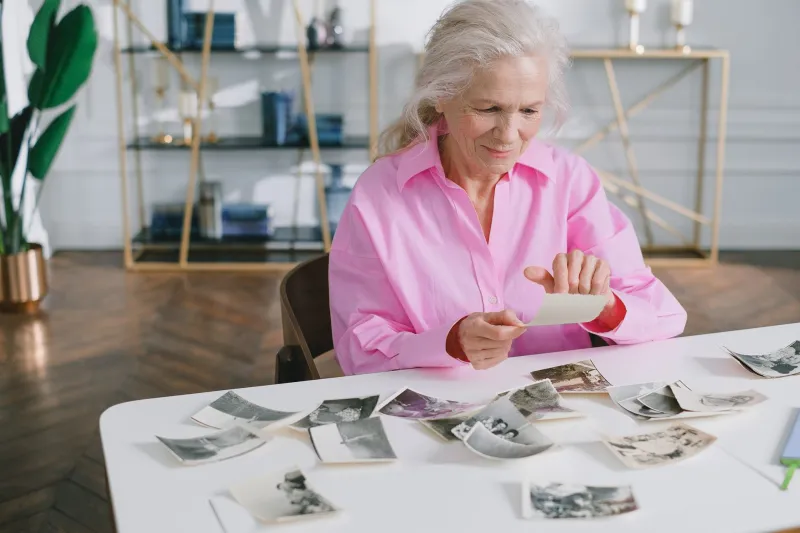
There's a version of genealogy research that looks like a Saturday afternoon hobby — a warm mug of coffee, a laptop full of census records, maybe a little jazz playing in the background. You're piecing together a puzzle, and every new name you find feels like a small victory.
Then one day, you find something that stops you cold.
Maybe it's a death record for a child who lived only three days. Maybe it's a great-grandmother's name appearing in a list of asylum patients. Maybe it's the sudden, unexplained disappearance of an entire branch of your family from the historical record — and you slowly realize why. For a growing number of Americans who've gone deep into their family histories, genealogy research isn't just intellectually challenging. It can be emotionally devastating.
Nobody Warns You About the Grief
The genealogy world does a pretty good job of celebrating the wins. The Facebook groups light up when someone finds a ship manifest or cracks open a brick wall. DNA match communities cheer when a long-lost cousin makes contact. And that's genuinely wonderful.
What gets talked about a lot less? The grief.
Not grief in the abstract, philosophical sense — but real, heavy, sit-on-the-floor-and-cry grief. The kind that sneaks up on you when you're least expecting it.
"I was completely unprepared for how sad it would make me," says one RootsGather community member from Ohio who spent two years tracing her maternal line. "I found records of my great-great-grandmother who lost five children before any of them turned four. She had seven kids total. I kept thinking about who she was as a person, what her daily life felt like. I cried for days. It sounds dramatic, but it was like losing people I'd never met."
That experience — grieving for ancestors you never knew — has a name in some therapeutic circles. It's sometimes called historical grief or ancestral grief, and grief counselors are increasingly seeing it in clients who've embarked on deep genealogical research.
The Weight of Inherited Trauma
For many researchers, the pain isn't just about loss. It's about discovering that the hardships your ancestors endured didn't stay neatly in the past — they rippled forward, shaping your family's patterns, silences, and struggles in ways nobody ever named.
Researchers studying intergenerational trauma have documented how the psychological wounds of events like the Holocaust, American slavery, forced Indigenous displacement, and famine can echo through family systems for generations. When a genealogist uncovers evidence of these experiences in their own family tree, it can reframe their entire understanding of who they are and where they come from.
One man from the RootsGather community who traced his Black family's history in Mississippi described it this way: "I knew intellectually that my ancestors were enslaved. But finding an actual record — a name, an age, a dollar value assigned to a human being who was my blood — that's a completely different thing. It made me angry and heartbroken in a way I'm still processing."
For others, the discovery isn't rooted in historical atrocity but in quieter, closer-to-home pain: the grandfather who abandoned his family and started a new one, the sibling estrangement that split a family tree into two separate silences, the relative who died by suicide and whose name was never spoken at the dinner table.
When the Research Brings You Face-to-Face With Family Secrets
Estrangements are their own particular category of genealogy heartbreak. You might start out tracing your grandmother's side of the family with nothing but curiosity — and end up discovering that she had a brother she never mentioned, a child she gave up, or a first marriage that everyone agreed to forget.
These discoveries force a reckoning. Not just with the past, but with the living people in your family who kept those secrets. And sometimes, the most painful part isn't the secret itself — it's the realization that the family narrative you grew up with was, in some significant way, a fiction.
"I found out my grandfather had a whole other family," shares one community member from Texas. "He'd had kids before he met my grandmother. Nobody ever said a word. When I brought it up at a family dinner, my aunt acted like I'd done something wrong by finding out. Like I was the problem."
That response — being treated as the disruptor for uncovering inconvenient truths — is something many genealogists encounter. And it adds a layer of loneliness to the grief. You're mourning a version of your family story, and the people around you either don't know or don't want to know.
Finding a Way Through
So what do you do when the research leaves you raw?
First, it helps to acknowledge that what you're feeling is legitimate. Grief doesn't require a funeral. It doesn't require that you personally knew the person you're mourning. Losing an idealized version of your family history — or confronting the weight of what your ancestors endured — is a real loss, and it deserves real care.
Therapists who work with genealogists suggest a few things that can help:
Take breaks. Genealogy research can become compulsive, especially when you're close to a breakthrough. But if you find yourself spiraling emotionally, stepping away for a few days isn't quitting — it's self-preservation.
Talk to someone who gets it. Online communities like RootsGather exist precisely for this reason. Sharing what you've found with people who understand the research process — and the emotional weight it can carry — is genuinely different from trying to explain it to someone who's never done it.
Consider working with a therapist. This isn't overkill. If what you've discovered is touching on trauma — either your ancestors' or your own — a professional can help you process it in a healthy way. Some therapists now specialize in family systems and intergenerational trauma specifically.
Honor what you've found. Some people find healing in creating small rituals around difficult discoveries — lighting a candle, writing a letter to an ancestor, or simply saying their name out loud. It sounds simple, but it can be surprisingly powerful.
The Other Side of the Hurt
Here's the thing that many genealogists who've been through the emotional wringer will tell you: the grief, as hard as it is, doesn't usually make them wish they'd never looked.
Knowing the full story — even the painful parts — tends to create a deeper, more honest relationship with where you come from. The ancestors who suffered weren't just names on a census record. They were people who loved and lost and kept going anyway. And finding them, really finding them, means carrying them forward in a more complete way.
That Ohio woman who cried for days over her great-great-grandmother's lost children? She now has a framed photo of that ancestor on her wall. "She deserves to be remembered," she says. "Even if remembering her hurts."
Sometimes, that's what roots are — not just the foundation that holds you up, but the ache that reminds you how far you've come.