Before They're Gone: How a Simple Conversation With Grandma Can Unlock More Than Any DNA Kit Ever Could
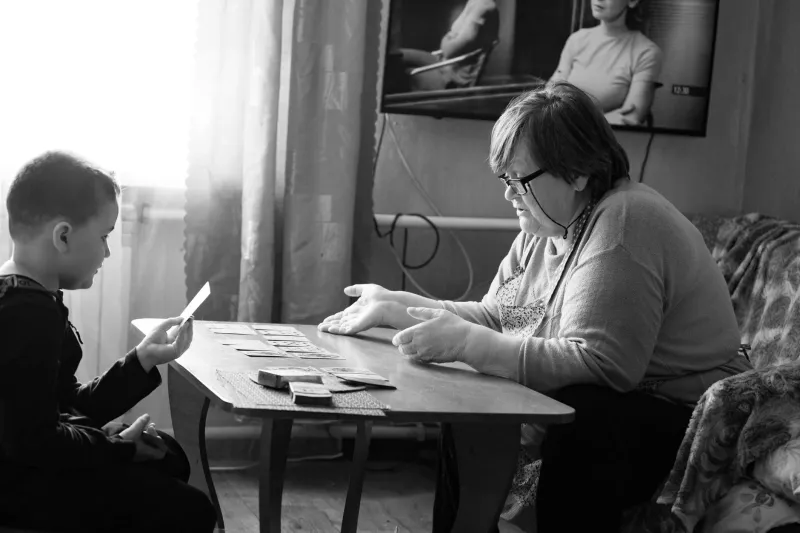
Let's be honest. Most of us got into genealogy because of a spit kit.
You swabbed, mailed it off, and a few weeks later you were staring at a pie chart of ethnicities and a list of strangers who share your cheekbones. It's genuinely exciting. But here's the thing nobody talks about enough: your 84-year-old grandmother is sitting in a recliner in Dayton, Ohio right now, holding an entire world inside her head — and no algorithm on earth can extract it.
That world has an expiration date.
The RootsGather community has been buzzing lately about what some members are calling the "Grandparent Interview Project" — an informal movement of everyday people who are picking up their phones, hitting record, and just talking to their oldest relatives before those conversations become impossible. The stories coming out of these sessions are, in a word, extraordinary.
Why Recorded Conversations Beat Documents Every Time
Census records can tell you where your great-grandparents lived in 1920. A death certificate can tell you cause of death. But neither of those will ever tell you that your great-grandmother kept a letter from a man she loved before she married your great-grandfather — tucked inside a Bible she never let anyone touch.
That detail came from a recorded interview. A RootsGather member named Carla, from outside of Memphis, learned it during a three-hour Sunday afternoon conversation with her 91-year-old great-aunt. "She just started talking," Carla shared in our community forum. "I had my phone on the table and I barely said a word. She told me things she'd never told her own kids."
That's the magic of oral history. When you create the right conditions — low pressure, genuine curiosity, no agenda — people open up. And what they share fills in the texture of a family tree that documents simply cannot provide.
Getting Started: You Don't Need Fancy Equipment
Here's the best news: you don't need a podcast studio or a journalism degree to do this well. Your smartphone is more than enough. Apps like Voice Memos (iPhone) or Easy Voice Recorder (Android) work perfectly. If you want video — and you really should consider it — just prop your phone up against a stack of books and hit record.
A few practical tips before you sit down:
- Tell them ahead of time. Don't ambush anyone. Let your relative know a few days in advance that you'd love to hear their stories. Some people need time to mentally prepare — and they might dig out old photos or mementos to bring to the conversation.
- Pick the right setting. Their home is almost always better than yours. Familiar surroundings trigger memories in ways that a neutral space won't.
- Start with the easy stuff. Don't open with "Did anyone in our family ever do anything shameful?" Lead with childhood memories, favorite foods, school days, first jobs. The deeper stuff surfaces naturally.
- Bring a list, but don't be a robot. Questions are a guide, not a script. If they go somewhere unexpected, follow them.
A Starter Template for Your First Interview
Not sure what to ask? Here's a loose framework that RootsGather members have found works really well:
Childhood & Early Life
- What's your earliest memory?
- Where did you grow up, and what was the neighborhood like?
- What did your parents do for work?
- What was dinner like in your house growing up?
Family Dynamics
- Who in the family were you closest to, and why?
- Were there relatives people didn't talk about? Why not?
- What did your grandparents tell you about their parents?
Big Life Moments
- Where were you when [a major historical event] happened?
- How did you meet your spouse?
- What's the hardest thing you've ever been through?
Wisdom & Legacy
- What do you want the younger generations to understand about your life?
- Is there anything you've never told anyone that you wish someone knew?
That last question, by the way, is where the real gold tends to hide.
Navigating the Sensitive Stuff
Every family has corners that feel a little dark — estrangements, addiction, children given up for adoption, affairs, financial ruin, immigration trauma. These topics don't have to be off-limits, but they do require care.
A few things to keep in mind:
Don't push. If someone says "I'd rather not talk about that," respect it completely. You can always circle back gently at another point in the conversation, but forcing it will shut the whole thing down.
Normalize complexity. Phrases like "I know families go through hard things" or "You don't have to protect me from the real story" can give someone permission to be honest without feeling like they're betraying anyone.
Be ready for surprises. Marcus, a member from the Chicago area, was doing a casual interview with his grandfather when the older man casually mentioned a brother who had died in circumstances the family had never discussed. "I didn't know what to say," Marcus wrote in our forum. "So I just said, 'Tell me about him.' And he talked for 45 minutes. He'd been holding that for decades."
Sometimes the simple act of asking — really, genuinely asking — is all it takes.
Preserving What You Capture
Once you've got a recording, don't let it sit on your phone forever. Back it up in at least two places (cloud storage and a physical hard drive is a solid combo). If you're feeling ambitious, transcription services like Otter.ai can turn audio into searchable text surprisingly quickly.
Consider sharing edited clips with other family members — a group chat, a family Facebook page, or even a private YouTube channel. Several RootsGather members have started compiling their interviews into informal digital family archives, sometimes paired with scanned photos and documents. It doesn't have to be fancy. It just has to exist somewhere beyond one device.
The Irreplaceable Thing
Here's what keeps coming up in our community conversations about this: the voice.
After someone is gone, you can look at their photo. You can read their name on a census page. But if you recorded them — if you sat down and let them talk — you have something no test tube or database can replicate. You have the way they laughed. The pause before they said something hard. The particular way they pronounced a word from a language their grandparents spoke.
One member put it simply in a recent thread: "My grandmother died two years ago. I have 11 hours of her voice on my phone. Some days that's the only thing that makes sense."
DNA can tell you a lot about where you came from. But a conversation — a real, unhurried, recorded conversation with someone who was there — can tell you who you are.
Don't wait until you can't anymore. Set up the interview. Hit record. Ask the question.
Have you done a family interview that surprised you? Share your experience in the RootsGather community forum — we'd love to hear what you discovered.