From Strangers to Cousins: How a Whole Industry Grew Up Around Getting You in the Same Room as Your DNA Matches
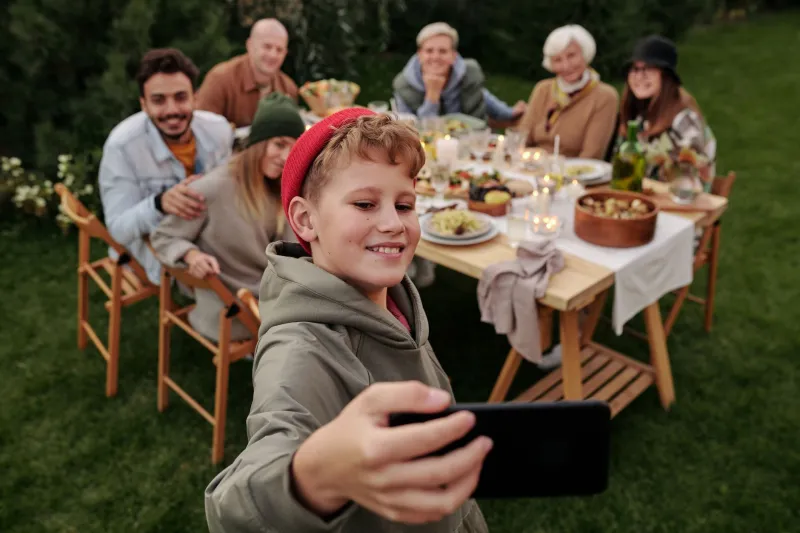
Somewhere in rural Kentucky last September, about forty people who had never met each other stood in a church fellowship hall eating pulled pork and trying to figure out exactly how they were related. Some had driven from as far as Oregon. One couple had flown in from Germany. They all shared a surname — Holbrook — and a common ancestor who had homesteaded the surrounding hills sometime in the 1840s. What brought them together wasn't a wedding or a funeral. It was a business.
Specifically, it was Appalachian Roots Gatherings, a three-year-old company run by a former event planner named Delia Combs out of Lexington. Delia doesn't just rent out the hall and print the name tags. She cross-references attendee DNA data, builds preliminary family trees, coordinates with local archives, arranges cemetery tours, and sends everyone home with a custom-bound booklet tracing their shared lineage. She charges between $150 and $400 per family group depending on the package. And she's booked solid through next spring.
"People think it's just a party," Delia said, laughing. "It is not just a party."
A Cottage Industry Finds Its Footing
The genealogy boom of the last decade — fueled by cheap DNA kits, digitized records, and the cultural weight of shows like Finding Your Roots — didn't just create a hobby. It created a market. Millions of Americans now carry around DNA match lists with hundreds or even thousands of names on them, most of whom are complete strangers. The question of what to do with all that information has quietly given rise to an entire ecosystem of entrepreneurs.
Reunion planners like Delia occupy one corner of that ecosystem. Heritage tourism companies occupy another. There are also DNA match meetup coordinators — a newer breed of organizer who works specifically with people who've connected through testing platforms like AncestryDNA or 23andMe and want to move the relationship offline. Some of these coordinators operate as solo freelancers. Others have built small agencies. A few are even offering subscription services, essentially acting as ongoing genealogy concierges who help clients manage and nurture their expanding family networks over time.
The numbers are hard to pin down — this isn't an industry with a trade association or an annual report — but practitioners across the country describe the same thing: demand that has outpaced their ability to keep up.
"I started doing this as a side project," said Marcus Tillman, who runs Heritage Handshake, a DNA meetup coordination service based out of Atlanta. "Within eight months I had quit my day job. The interest is just relentless."
What People Are Actually Paying For
It would be easy to be cynical about this. People are, after all, paying strangers to help them meet other strangers based on shared genetic percentages. But spend any time talking to participants and the cynicism fades pretty quickly.
Take Sandra Ybarra, a 58-year-old retired teacher from San Antonio who attended a heritage gathering last year focused on families of Mexican and Spanish descent in South Texas. She'd been researching her family for years but had hit a wall — records were sparse, oral history was fragmented, and her DNA match list was full of names she didn't recognize.
"When I walked into that room," she said, "there was a woman who had the same great-great-grandmother as me. We figured it out within the first hour. She had photographs. Actual photographs of people I had only ever seen listed in a census record." Sandra paused. "I cried. I'm not embarrassed to say that."
That emotional payoff is the product these companies are really selling. The logistics — the venue booking, the genealogy prep work, the catered lunch — are just the delivery mechanism.
The Logistics Are No Joke
Behind the scenes, though, those logistics are genuinely complex. Organizing a gathering of distant relatives who've never interacted requires a delicate mix of genealogical expertise, event management skill, and something close to social psychology.
One of the trickier challenges is managing expectations. Not every DNA match is a warm reunion waiting to happen. Some people come in hoping for an instant family and leave disappointed when the chemistry isn't there. Others are blindsided by family stories they weren't prepared to hear — tales of estrangement, of children given up for adoption, of relationships that crossed lines their ancestors preferred to keep buried.
"I always do a pre-event call with every attendee," said Marcus Tillman. "I need to know what they're hoping for, and I need to be honest with them about what's realistic. This isn't a fairy tale service. Sometimes you meet a cousin and you really connect. Sometimes you meet a cousin and you exchange emails and never write each other. Both of those outcomes are okay."
Delia Combs has started including what she calls a "soft landing" session at the end of her events — a facilitated group conversation where attendees can process what they've experienced before they get in their cars and drive home. She brought in a licensed counselor after one particularly emotional gathering a couple of years ago. Now it's standard practice.
When the Business Meets the Community
For the genealogy community more broadly, this industry raises some genuinely interesting questions. Platforms like RootsGather exist precisely because people want to connect around shared heritage — but those connections have traditionally been self-organized, peer-to-peer, driven by curiosity rather than commerce. Does the professionalization of that impulse change something essential about it?
Opinions vary. Some longtime genealogy researchers are enthusiastic, arguing that professional organizers lower the barrier for people who want to connect but don't know where to start. Others worry about data privacy — specifically, what happens to the DNA information and family tree data that participants share with these companies.
"I always ask: who owns the data after the event?" said one genealogy researcher who asked not to be named. "These are deeply personal records. People should be asking hard questions before they hand them over."
It's a fair point, and one the better operators in this space seem to take seriously. Delia Combs, for her part, has a strict data deletion policy and doesn't retain any participant genetic information after the event concludes. Marcus Tillman uses a third-party encrypted platform and gives attendees full control over what's shared and with whom.
The Part No One Fully Planned For
Back in that Kentucky fellowship hall, after the pulled pork and the cemetery tour and the booklet distribution, something happened that Delia hadn't scheduled.
An 84-year-old man named Earl, who had driven up from Tennessee with his daughter, stood up without being asked and started telling stories. Stories about his grandfather, who had been one of the last people in the county to remember the Civil War. Stories about the land, and the names carved into the trees, and the way his family had said goodbye to each other across generations. He talked for almost forty minutes. Nobody moved.
"That moment," Delia said quietly, "is why I do this. You can't manufacture that. You can only create the conditions for it to happen."
That might be the most honest description of what this whole industry is actually selling. Not reunions, exactly. Not tourism. Not even genealogy. Just the conditions — the room, the research, the name tags, the pulled pork — for something real to happen between people who share a past they're only just beginning to understand.