Strangers at the Reunion: When DNA Matches Show Up in Real Life
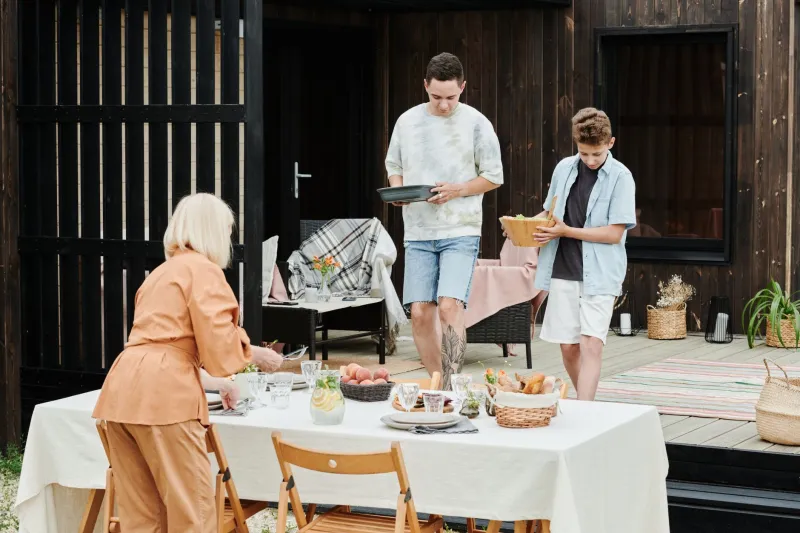
Let's set the scene. You're standing in a rented pavilion at a state park somewhere in central Tennessee. There are folding tables covered in potluck dishes. Someone has made a poster-sized family tree. A woman you've never met is hugging you and crying a little, because apparently her grandmother and your grandfather were first cousins, which makes the two of you — she's done the math — third cousins once removed.
You don't know her name yet. You will by the end of the afternoon. And somehow, inexplicably, it will feel like you've known her your whole life.
Welcome to the modern family reunion.
The Reunion Has Evolved
For generations, the family reunion was a fairly contained event. You showed up, you saw the same faces you saw every few years, you ate potato salad, and you drove home. The guest list was managed by whoever the family matriarch happened to be, and it didn't change much.
Then came DNA testing. Then came the match lists with thousands of names on them. Then came genealogy forums and Facebook groups and platforms where distant cousins started finding each other from across the country, across state lines, across the boundaries of families that had been separated by migration, adoption, or just the slow drift of generations.
Now the reunion has a whole new cast of characters — and nobody's entirely sure how to seat them.
"The logistics alone are a nightmare," laughs Cheryl, a 58-year-old retired teacher from outside of Raleigh who organized what she calls a "DNA reunion" for a branch of her family that had scattered from the Carolinas to California over the past century. "We had people flying in from four states. Some of them had never met anyone else in the family. Some of them didn't even know they had this family until a few years ago."
Her event drew 34 people. She'd been corresponding with most of them for months. Still, she says, nothing quite prepared her for the moment they were all in the same room.
The Awkward Middle Part
Here's what the genealogy forums don't always warn you about: the first hour of a gathering like this is deeply weird.
You've been chatting with these people online. You know their username. You know their grandmother's maiden name. You might even know intimate things about their family history — the hard stuff, the discoveries that came with complicated feelings. But you don't know how they take their coffee. You've never heard their laugh in person.
The shared DNA creates an expectation of intimacy that hasn't been earned yet through actual relationship-building. That gap — between genetic closeness and social familiarity — is something a lot of reunion organizers discover the hard way.
RootsGather community members who've organized or attended these kinds of gatherings consistently report the same arc: awkward opening, slow warming, and then — usually around hour two or three, once the food is out and a few stories have been shared — something clicks. The connection stops feeling theoretical and starts feeling real.
"There was this moment," says Marcus, a 45-year-old from Detroit who attended a reunion for his paternal family's Mississippi roots last summer, "where my cousin — we'd only met two hours before — made the exact same joke I would have made. Same timing, same delivery. And we both just stopped and looked at each other like, oh, so that's what this is."
When the Research Becomes a Road Trip
Beyond the pavilion-and-potluck model, a growing number of genealogy enthusiasts are organizing what you might call heritage pilgrimages — trips back to ancestral places that double as family reunions.
These events blend travel, research, and relationship-building in ways that can be genuinely profound. Visiting the county where your great-great-grandparents farmed, standing in front of a church where generations of your family were baptized, finding a grave marker with your surname on it — these experiences hit differently when you're doing them alongside a cousin you found through a DNA match.
"We went to a small town in Poland," says Joanna, a second-generation Polish-American from Chicago who organized a trip for eight family members she'd connected with through genealogy research. "None of us had ever been. We found the house where my grandfather was born. We all just stood there in the street, not really saying anything. You can't really prepare for that."
The emotional intensity of these moments is one reason organizers consistently recommend having some structure in place — not a rigid itinerary, but a plan for how to hold space for big feelings when they inevitably arrive.
The Unexpected Fallout
Not every reunion story has a warm ending, and it's worth being honest about that.
Sometimes the person you've been emailing for months turns out to be difficult in person. Sometimes old family tensions surface when branches that separated generations ago are suddenly back in contact. Sometimes the DNA connection that felt so meaningful online doesn't translate into a real-world relationship anyone wants to maintain.
And then there are the harder cases — the ones involving NPE (non-paternity event) discoveries, adoptions, or family secrets that were deliberately kept hidden. When a reunion brings together people whose very existence was unknown to each other, the emotional stakes go way up.
"I've seen it go beautifully," says one RootsGather community moderator who asked to remain anonymous. "And I've seen it go sideways in ways that took people years to process. The genealogy part is almost the easy part. The human part is where it gets complicated."
Before You Send the Invitations
If you're thinking about organizing a gathering of your own DNA matches or long-lost relatives, a few things are worth considering before you book the pavilion.
First, check in with people individually before assuming they're ready for a group event. For some matches — particularly adoptees or people navigating NPE discoveries — a large gathering might feel overwhelming before they've had time to process their situation privately.
Second, give people an out. Not everyone who says yes to an invitation actually wants to come. Making it genuinely easy to decline (and to leave early) takes pressure off people who are still figuring out what this new family connection means to them.
Third, and maybe most importantly: lower your expectations just enough to let the real thing surprise you. The reunion you imagined and the reunion you actually have will be different. The one you actually have will probably be better — stranger, messier, more human, and more memorable than anything you could have planned.
That woman crying and hugging you in the pavilion? She's going to become one of your favorite people. You just don't know it yet.