Data Rich, Story Poor: The Strange Emptiness of Knowing Too Much About Your Family
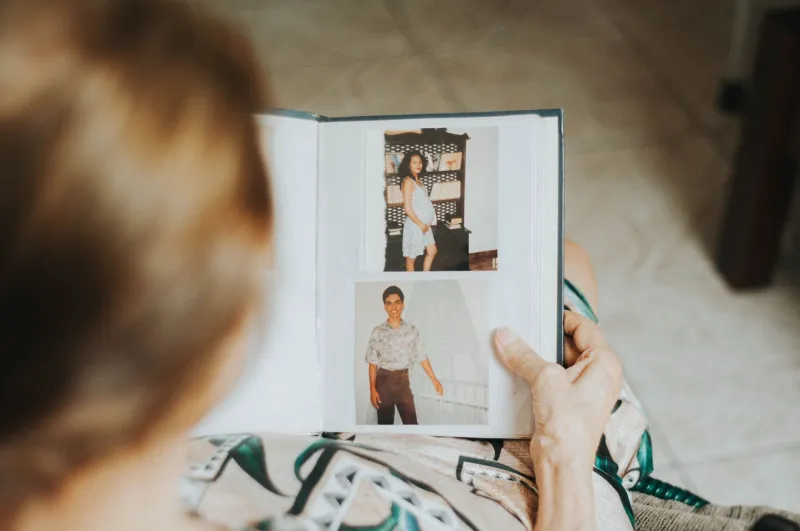
Let's say you've done everything right. You've built a tree with hundreds of names. You've cross-referenced census records, tracked migration patterns through ship manifests, and maybe even splurged on a DNA kit that connected you to a few thousand distant cousins. By any measurable standard, you know your family history.
So why does it still feel like you're reading about strangers?
This is the quiet frustration that's been bubbling up in genealogy forums and community threads for a few years now — and it doesn't get talked about nearly enough. Call it the data paradox: the more factual information we accumulate about our ancestors, the more we can mistake that information for genuine understanding. And those are very different things.
The Illusion of Completeness
There's something deeply satisfying about filling in a blank field on a family tree. Birth date: confirmed. Death record: found. Immigration year: verified. Each little checkbox feels like progress, and it is — but it's a specific kind of progress that can quietly mislead us.
Facts about a person are not the same as knowledge of a person. You might know that your great-grandfather arrived at Ellis Island in 1903, but you probably don't know whether he was terrified or exhilarated. You know the county in Ireland where your ancestor was born, but you don't know what she smelled like, what she laughed at, or whether she was the kind of woman who held grudges. And yet, those human details are precisely what would make her feel real to you.
Digital databases have made the fact-gathering part of genealogy extraordinarily accessible. Platforms like Ancestry, FamilySearch, and MyHeritage have digitized millions of records that previous generations of researchers would have spent lifetimes hunting through dusty courthouse basements to find. That's genuinely remarkable. But the technology has also subtly reframed what genealogy is — and for a lot of people, it's quietly shifted from storytelling to data collection.
When the Tree Becomes a Spreadsheet
Talk to longtime members of any genealogy community and you'll hear a version of the same observation: beginners often get hooked on the thrill of discovery, then hit a wall somewhere around generation five or six. The records get sparse. The names get unfamiliar. The emotional fuel that drove the early research starts running low.
Part of that stall happens because, without narrative context, a list of names and dates is just a list. There's no story pulling you forward, no character you're rooting for. Your tree starts to feel more like a corporate org chart than a family.
This isn't a personal failing — it's a structural problem with how most genealogy tools are designed. They're built to help you find records, not to help you interpret what those records mean about a human life. A death certificate tells you someone died of tuberculosis in 1921. It doesn't tell you what the family did afterward, how they grieved, or how that loss rippled through the next three generations.
Bridging the Gap: From Records to Real People
The good news is that the gap between data and understanding is bridgeable — it just requires a deliberate shift in how you approach your research.
Start treating your ancestors as characters, not entries. Pick one person from your tree — ideally someone from a generation where you have at least a handful of records — and commit to learning everything you can about the world they lived in. What was happening politically in their county that year? What did the economy look like? What did people eat, fear, celebrate? Historical context doesn't just fill in gaps; it transforms a name on a page into someone navigating a recognizable human life.
Dig into local history alongside family history. Newspapers, church records, and local historical society archives often contain the texture that official records strip away. A mention in a small-town newspaper — a wedding notice, a letter to the editor, a listing in a church bulletin — can suddenly make an ancestor feel three-dimensional in a way that no census record can.
Write the story, even when you're guessing. This is advice that makes some researchers uncomfortable, but it's worth sitting with. There's a difference between fabricating facts and making informed, imaginative inferences. If your ancestor crossed the Atlantic in steerage in the middle of winter, you can write about what that crossing might have felt like without claiming it as documented truth. Labeling it clearly as historical interpretation isn't cheating — it's storytelling, and storytelling is how human beings have always made sense of the past.
Use your DNA matches as connective tissue. Those thousands of distant cousins aren't just statistical noise. Reaching out — even to second or third cousins — can surface family stories, old photographs, and oral histories that no database has ever indexed. The RootsGather community is full of people who've made meaningful breakthroughs not through a records search but through a single conversation with a match who remembered something their grandmother used to say.
What We're Actually Looking For
Here's the thing that nobody in the genealogy world says out loud often enough: most people aren't really searching for records. They're searching for a sense of continuity. They want to feel like they belong to something longer and larger than their own individual life — like there's a thread connecting them backward through time to people who struggled and loved and figured things out.
Data can point you toward that feeling. But it can't deliver it on its own.
The researchers who seem to find the deepest satisfaction in this work aren't necessarily the ones with the most complete trees. They're the ones who've learned to sit with incomplete information and still find a way to make meaning from it. They ask different questions — not just who were these people? but what did they want? What were they afraid of? What did they pass down without realizing it?
Your family's story isn't stored in a database. It lives in the space between the records, in the interpretations you're willing to make, and in the stories you choose to tell. The data is just the starting point. The real work — the meaningful work — begins when you decide to become a storyteller, not just a researcher.